Allows for Strong Connection to the Work Environment and Easy Transfer of Training
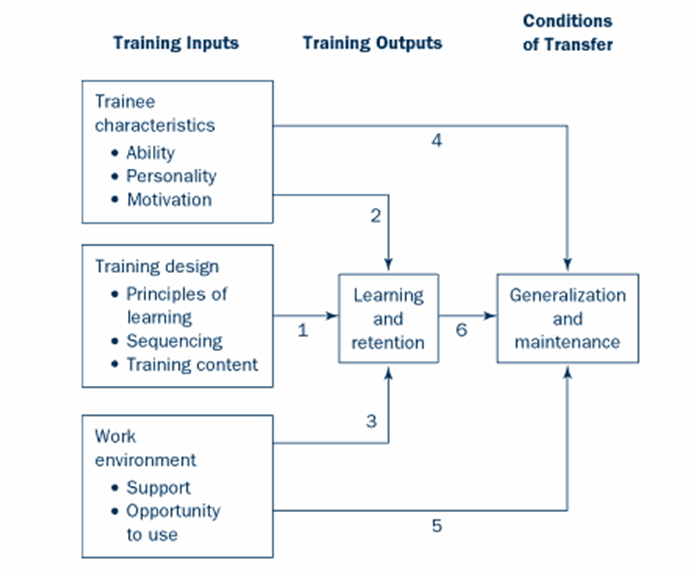
Most learning and development initiatives are meant to save money or make money. So when corporate learning and development initiatives don't improve organizational measures, you lose twice. First, you lose the cost of the training itself in time and dollars. But you also never realize the benefits of the training being applied. The point: transfer of training is critically important for learning and development teams. Yet, despite the importance, many companies lean heavily on learning methods focused on knowledge acquisition. The problem is that only about 19 percent of knowledge acquired can be skillfully applied. And without application, we forget 75 percent of what we learned in less than a week. So what's the solution? Building transfer of training principles into your L&D activities makes them "stickier" and increases training effectiveness. Below we discuss how to implement transfer of training principles into your program for maximum effect. Transfer of training can be a tricky concept to understand—and even tougher to master and implement in your L&D efforts. However, if you want your training efforts to succeed in today's business world, it's a concept you shouldn't ignore. We cannot discuss transfer of training without discussing knowledge application. The two concepts go hand-in-hand. Knowledge application refers to applying information or skills gained during a training session to a real-world situation. We like to conceptualize knowledge application as the glue that ties training efforts to employee development and improved job performance. Even the most engaging training will be ineffective if the employee can't see how the lessons apply to their daily job duties. Related Read: The Top 5 Trends in Learning and Development When conducting L&D activities, you will want to ensure that you are including knowledge application in those efforts. Knowledge without application is just information. With the amount of information presented to us daily, it's estimated that we only retain between 10-20 percent of what we hear or read. In other words, if your employees aren't able to see how the information provided in your L&D efforts applies to their daily work, they will be less likely to retain the information—and less likely to engage with the training activities in the first place. The result? Wasted company time and resources on training and development that will not change behavior or produce results. The first secret to mastering transfer of training is developing an understanding of the three types of knowledge transfer: positive transfer, negative transfer, and zero transfer. Examining these three types of training transfer will help you assess your current efforts. Let's examine each type in a bit more detail. Positive transfer occurs when one skill helps you learn another new skill. This type of training transfer often occurs when two skills are closely related or require the same underlying understanding. For example, an employee who already knows SQL may find it easier to learn HTML. The two coding languages are not directly related, but understanding the structure of one may help a learner grasp the structure of the other. Negative transfer occurs when learning one skill makes it more difficult to learn another new skill. Similarly to positive transfer, the two skills in this scenario will likely be closely related or based on the same root knowledge. However, the skills will require wildly different applications or processes. An example of negative transfer is when a student taught to use MLA citations in their schoolwork begins a new program and must now cite using APA style. The citation styles share many similarities, but the student's understanding of MLA is likely to trip them up in the areas where the styles differ. In other words, knowing MLA style has made APA style more difficult to master. The final type, zero transfer, occurs when one skill does not affect your ability to learn another new skill. Generally speaking, this occurs when two skills are completely unrelated. For example, an employee's knowledge of Microsoft Excel is not likely to impact their ability to learn the soft skill of leadership. Understanding how to structure a spreadsheet and how to inspire and guide subordinates are unrelated to one another, so the employee's knowledge of one will not impact their ability to learn the other. Once you understand the three types of training transfer and how they apply to your organization, you are ready to examine the transfer of training model. Multiple models exist, but the Baldwin and Ford model is the simplest and most effective. The Baldwin and Ford model is comprised of a three-stage process: Training inputs refer to the elements present going into a training session. These fall into three categories: Training outputs are the results gained from completing the training. In this stage, you will want to consider your trainees' success in the training program. How much have they learned throughout the training session or sequence? You will also want to consider retention here. If the trainee does well during the session but forgets all the lessons learned within a week, the training output is unsuccessful. Even if retention is strong in stage two, transfer of training is not guaranteed. For transfer of training to occur, the conditions of strong training transfer need to be met. According to the Baldwin and Ford model, these conditions are met when the concepts passed on through training are maintained in the work environment. A few factors that impact the trainee's ability to retain their knowledge successfully include having a system of support in the office, opportunities to perform work relevant to the material learned, and regular feedback and check-ins with leadership to ensure that transfer of training has occurred. Source: Baldwin and Ford (1988) Based on this model, which employee is more likely to retain training material successfully? Even though both employees receive strong training materials, Employee B is far more likely to retain the knowledge from their training than Employee A based on the other factors present in the situation. From examining the Baldwin and Ford Transfer of Training Model, it is easy to see that the training inputs significantly impact the transfer of training. Therefore, the next secret to making employee learning stick is to identify learning inputs within your control. The more factors you can positively impact, the greater your chances of positive training transfer. Training strategies and activities are where you have the most direct impact on transfer of training. Here are some of the training factors you can influence: As you delve into the details of the steps provided above, you may discover that your current L&D efforts include some of these practices. If so, this is an excellent start: keep up those practices. It can be difficult to control learner outcomes, so it's vital to understand and identify the factors you can control. Determining areas where you can have the most influence is a vital step toward effectively allocating your team's resources, time, and effort. As always, you will also want to ensure you are tying these efforts and changes to your L&D program back to your KPIs and other business metrics. Ensure your efforts align with your current departmental goals and objectives. Related Read: How to Measure ROI for your Leadership Development Programs Keeping your eyes on your metrics will also enable you to measure your L&D program's progress over time. This practice will help you see whether your efforts positively impact employees, enabling you to course-correct if you do not see the desired results. The success of your L&D program depends on knowledge retention. If your learning is not "sticky," your organization will not see a positive return on its investment into its L&D efforts. Transfer of training makes the difference between an L&D success story and a resounding disappointment. One of the keys to transfer of training is applying knowledge learned in job-like situations. At Capsim, we have seen firsthand how simulations can help your trainees do just that. CapsimInbox offers a variety of off-the-shelf simulations as well as custom-build simulations. No matter your trainee's role or training topic, a simulation enables your employees to apply knowledge in a controlled, real-world setting. Additionally, CapsimInbox can assess and measure your trainees' skill improvements over time. Curious to see how CapsimInbox can help your training stick? Test out an inbox simulation in just minutes. 👇 How to Build Transfer of Training into Your L&D Efforts

Start with Understanding the Three Types of Training Transfer
Positive Transfer
Negative Transfer
Zero Transfer
Then, Look at the Transfer of Training Model
Stage One: Training Inputs
Stage Two: Training Outputs
Stage Three: Conditions of Transfer
Next, Identify the Learning Inputs You can Positively Influence
Training Strategies & Activities
Work Environment
Finally, Build these Inputs into Your L&D Program
What Tools Can Help with Transfer of Training?
Source: https://www.capsim.com/blog/transfer-of-training
0 Response to "Allows for Strong Connection to the Work Environment and Easy Transfer of Training"
Post a Comment